
• Link to X
  • Link to Facebook
  • Link to Instagram
  • Link to Youtube
  • Link to Pinterest
  • Link to LinkedIn
Regeneration International
  • About
    • WHAT WE DO
    • MEDIA
    • CONTACT
  • Partners
    • PARTNER NETWORK
    • JOIN US
    • FARMERS & RANCHERS FOR A GREEN NEW DEAL
  • Farm Map
  • Billion Agave Project
  • Food Summit
  • RI Standard
  • Vía Orgánica
  • Resources
    • ANDRÉ LEU’S PUBLICATIONS
    • TRAILS OF REGENERATION VIDEO SERIES
    • PODCASTS
  • Events
    • REGEN AG COURSE 2026
    • FULL EVENTS CALENDAR
  • Newsletter
  • Donate
  • Click to open the search input field Click to open the search input field Search
  • Menu Menu

As Oceans Warm, Predators Are Falling Out of Sync with Their Prey

01/21/2025/by Andrew S. Lewis

For decades on the U.S. Mid-Atlantic coast, recreational anglers have braved the cold temperatures of late October and November to chase one of the region’s most iconic fish species, the striped bass. This season, just offshore of New Jersey and New York, the fall run was especially strong. “The amount of fish and [their size] was really, really high,” said Lou Van Bergen, a captain of Miss Barnegat Light, a 90-foot party boat out of Barnegat Light, New Jersey. “Every week, all the way through Thanksgiving, you could go out and catch nicer-sized fish.”

From the looks of the boat’s deck this fall, it would have been easy to assume that striped bass, once overfished to dangerously low numbers on the East Coast, had completed a remarkable comeback. Except that in the nearby Chesapeake Bay and in the Hudson River, where the fish return each spring to spawn, the hatching and maturation of juveniles “has been abysmal,” said John Waldman, an aquatic conservation biologist at the City University of New York. Waldman, an avid fisherman himself, called the low levels of striped bass recruitment, or spawning success, in these historically fertile estuaries “a real mystery.”
CONTINUE READING ON YALE ENVIRONMENT 360
https://regenerationinternational.org/wp-content/uploads/oceans-e1739296946500.webp 640 1125 Andrew S. Lewis https://regenerationinternational.org/wp-content/uploads/2018/10/RI-Logo-New.png Andrew S. Lewis2025-01-21 09:28:362025-02-11 13:03:00As Oceans Warm, Predators Are Falling Out of Sync with Their Prey

15 Fire-Resistant Plants & Landscaping Tips

01/10/2025/by Anne Balogh

Climate change, including hotter temperatures and shifting precipitation patterns, is creating the perfect conditions for increased wildfire risk across much of the United States, even in areas that were once considered reasonably safe. The frequency, extent, and severity of wildfires is also likely to intensify in the years to come, as prolonged droughts and escalating temperatures continue to parch the landscape.

If you live in a high-fire-risk zone (or an area where climate change has put you at greater risk) choosing plants for your garden that offer good fire resistance can help reduce the threat to your home and property. This strategy, called fire-resistant or fire-smart gardening, is designed to limit wildfire activity by creating a defensible space around your home where vegetation and other factors are managed to keep fire at a safe distance.

CONTINUE READING ON GARDEN DESIGN
https://regenerationinternational.org/wp-content/uploads/Agaves-00-scaled-e1753892174775.jpeg 858 2560 Anne Balogh https://regenerationinternational.org/wp-content/uploads/2018/10/RI-Logo-New.png Anne Balogh2025-01-10 10:30:222025-01-16 22:17:4215 Fire-Resistant Plants & Landscaping Tips

The World Is Changing Too Fast for Us: Organic Farmers on Urgency of French Protests

02/10/2024/by Anquelique Chrisafis

Pierre Bretagne woke at 4am to feed the cows on his organic farm near the coastal town of Pornic in western France, then did something he had never dared to before.

He made a cardboard protest banner about the nightmare of French bureaucracy and went to cheer on a go-slow convoy of tractors warning that French farming and the rural way of life was facing collapse. Effigies of dead farmers dangled from nooses on tractor trailers as the convoy drove into the centre of the Brittany city of Rennes, beeping horns and waving banners. “Quality has a price,” read one.

“We’re fed up and exasperated,” says Bretagne, 38. “I love my job – I farm organically because it’s what I believe in and it’s the right thing ethically and in terms of health. In nine years of farming, I’ve never been on a protest; I’d rather be with my animals.

KEEP READING ON THE GUARDIAN
https://regenerationinternational.org/wp-content/uploads/field-copy-2-scaled.jpeg 1707 2560 Anquelique Chrisafis https://regenerationinternational.org/wp-content/uploads/2018/10/RI-Logo-New.png Anquelique Chrisafis2024-02-10 11:19:462024-02-13 11:22:58The World Is Changing Too Fast for Us: Organic Farmers on Urgency of French Protests

Climate Change Being Fuelled by Soil Damage – Report

04/30/2019/by Roger Harrabin

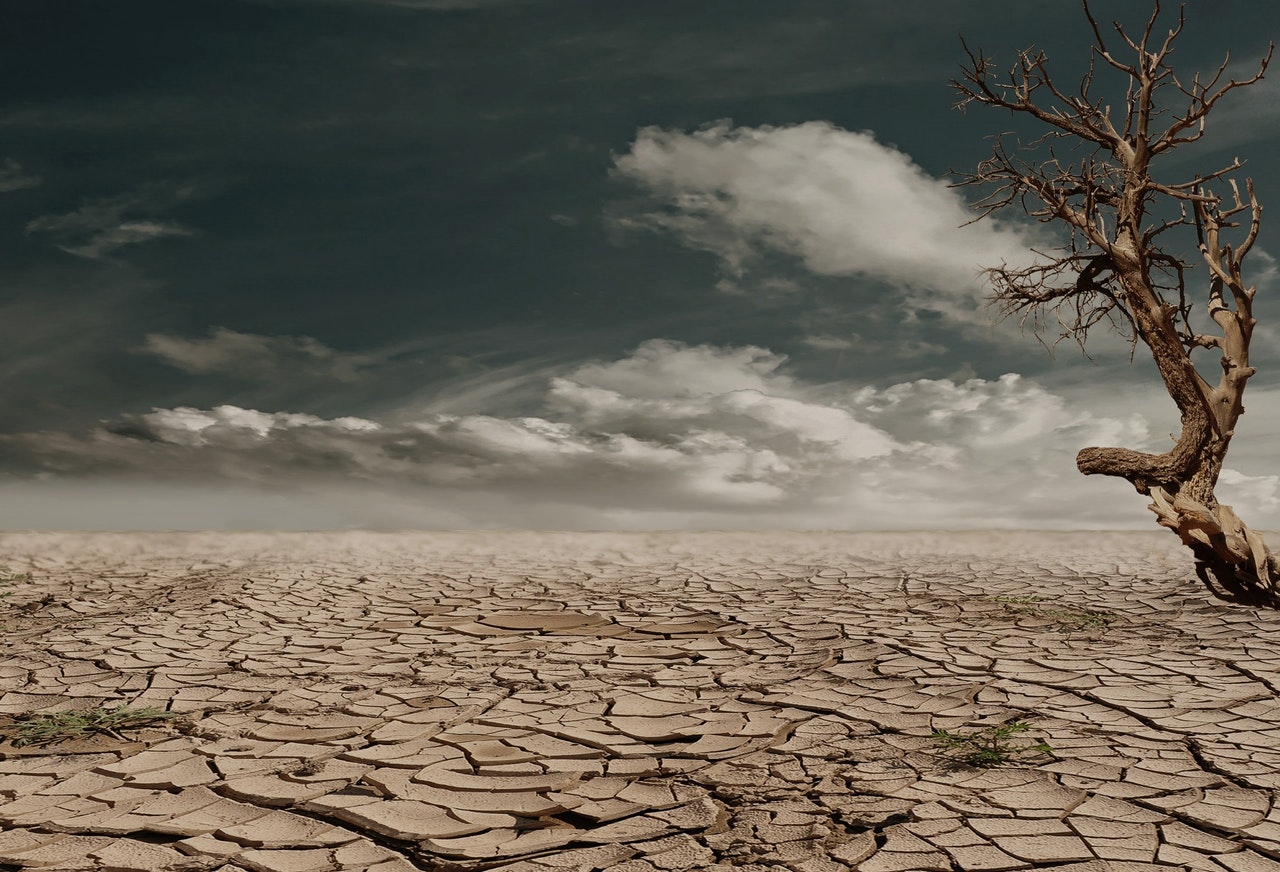
Climate change can’t be halted if we carry on degrading the soil, a report will say.

There’s three times more carbon in the soil than in the atmosphere – but that carbon’s being released by deforestation and poor farming.

This is fuelling climate change – and compromising our attempts to feed a growing world population, the authors will say.

Problems include soils being eroded, compacted by machinery, built over, or harmed by over-watering.

Hurting the soil affects the climate in two ways: it compromises the growth of plants taking in carbon from the atmosphere, and it releases soil carbon previously stored by worms taking leaf matter underground.

The warning will come from the awkwardly-named IPBES – the Intergovernmental Science-Policy Platform on Biodiversity and Ecosystem Services – a panel studying the benefits of nature to humans.

The body, which is meeting this week, aims to get all the world’s governments singing from the same sheet about the need to protect natural systems.

KEEP READING ON BBC NEWS

https://regenerationinternational.org/wp-content/uploads/2018/10/desert-drought-dehydrated-clay-soil-60013-e1769707256600.jpeg 640 1280 Roger Harrabin https://regenerationinternational.org/wp-content/uploads/2018/10/RI-Logo-New.png Roger Harrabin2019-04-30 11:10:592019-04-30 11:11:02Climate Change Being Fuelled by Soil Damage – Report

We’re Altering the Climate So Severely That We’ll Soon Face Apocalyptic Repercussions. Sucking Carbon Dioxide Out of the Air Could Save Us.

10/30/2018/by Dana Varinsky

Deadly hurricanes seem to be becoming more frequent, 12 of the 15 largest wildfires in California history have occurred in the last two decades, and cities like Cape Town, South Africa are facing severe water shortages.

This isn’t a coincidence.

These kinds of dangerous weather events are linked to carbon-dioxide emissions. In human history, the atmosphere has never had as much CO2 in it as it does today. Burning fossil fuels for energy, clearing forests, and demolishing wetlands all contribute to the problem.

CO2 stops heat from leaving the planet, which is why Earth’s average temperature is a degree Celsius higher than it used to be. Now we’re on track to see so much warming over the next several decades that apocalyptic repercussions could result.

A recent report from the Intergovernmental Panel on Climate Change (IPCC) predicts that just another half-degree temperature rise — which is predicted to happen by the year 2040.

KEEP READING ON BUSINESS INSIDER


https://regenerationinternational.org/wp-content/uploads/2018/10/climate-change-2241061_960_720.jpg 720 960 Dana Varinsky https://regenerationinternational.org/wp-content/uploads/2018/10/RI-Logo-New.png Dana Varinsky2018-10-30 01:04:322018-11-01 16:45:39We’re Altering the Climate So Severely That We’ll Soon Face Apocalyptic Repercussions. Sucking Carbon Dioxide Out of the Air Could Save Us.

Capturing Co2 from Air: To Keep Global Warming under 1.5°c, Emissions Must Go Negative, Ipcc Says

10/22/2018/by Sabrina Shankman

The UN’s latest global warming report made it clear that if the world is to avoid the worst impacts of climate change, society urgently needs to move away from fossil fuels completely.

Climate Change Being Fuelled by Soil Damage – Report

Photo credit: Pexels

But to keep the planet from warming more than 1.5 degrees Celsius, the report says, we’ll also have to figure out how to undo some of the damage that’s already been done.

“Given our current knowledge, we can’t get to 1.5 degrees without removing carbon from the atmosphere and storing it,” said Kelly Levin, a senior associate at the World Resources Institute.

With 1.5°C of warming just around the corner, the UN Intergovernmental Panel on Climate Change (IPCC) considered several solutions for removing CO2 from the air—some as simple as planting more trees, others as complex as using technology to filter CO2 from the air. Their practicality and their risks vary considerably.

KEEP READING ON INSIDE CLIMATE NEWS


https://regenerationinternational.org/wp-content/uploads/2018/10/desert-drought-dehydrated-clay-soil-60013-e1769707256600.jpeg 640 1280 Sabrina Shankman https://regenerationinternational.org/wp-content/uploads/2018/10/RI-Logo-New.png Sabrina Shankman2018-10-22 10:17:012018-10-22 11:05:17Capturing Co2 from Air: To Keep Global Warming under 1.5°c, Emissions Must Go Negative, Ipcc Says

Climate Change, Human Impacts, and Carbon Sequestration in China

04/21/2018/by Regeneration International

Authors: Jingyun Fang, et. al. | Published: April 17, 2018

The scale of economic growth in China during the past three decades is unprecedented in modern human history. China is now the world’s second largest economic entity, next to the United States. However, this fast economic growth puts China’s environment under increasing stresses. China can be viewed as a massive “laboratory” with complex interactions between socioeconomic and natural systems, providing an excellent opportunity to examine how environmental changes and intensive human economic activities influence natural systems. This special feature explores the impacts of climate change and human activities on the structure and functioning of ecosystems, with emphasis on quantifying the magnitude and distribution of carbon (C) pools and C sequestration in China’s terrestrial ecosystems. We also document how species diversity, species traits, and nitrogen (N) and phosphorus (P) stoichiometry mediate ecosystem C pool and vegetation production. This overview paper introduces the background and scientific significance of the research project, presents the underlying conceptual framework, and summarizes the major findings of each paper.

KEEP READING ON PROCEEDINGS OF THE NATIONAL ACADEMY OF SCIENCES
https://regenerationinternational.org/wp-content/uploads/2015/09/9149348974_9ba7067153_o-1170x779.jpg 779 1170 Regeneration International https://regenerationinternational.org/wp-content/uploads/2018/10/RI-Logo-New.png Regeneration International2018-04-21 08:56:192018-04-20 13:25:28Climate Change, Human Impacts, and Carbon Sequestration in China

Plant Diversity Enhances Productivity and Soil Carbon Storage

04/19/2018/by Regeneration International

Author: Shiping Chen, et. al. | Published: April 16, 2018

Significance

Soil carbon sequestration plays an important role in mitigating anthropogenic increases in atmospheric CO2 concentrations. Recent studies have shown that biodiversity increases soil organic carbon (SOC) storage in experimental grasslands. However, the effects of species diversity on SOC storage in natural ecosystems have rarely been studied, and the potential mechanisms are yet to be understood. The results presented here show that favorable climate conditions, particularly high precipitation, tend to increase both species richness and belowground biomass, which had a consistent positive effect on SOC storage in forests, shrublands, and grasslands. Nitrogen deposition and soil pH generally have a direct negative effect on SOC storage. Ecosystem management that maintains high levels of plant diversity can enhance SOC storage and other ecosystem services that depend on plant diversity.

Abstract

Despite evidence from experimental grasslands that plant diversity increases biomass production and soil organic carbon (SOC) storage, it remains unclear whether this is true in natural ecosystems, especially under climatic variations and human disturbances. Based on field observations from 6,098 forest, shrubland, and grassland sites across China and predictions from an integrative model combining multiple theories, we systematically examined the direct effects of climate, soils, and human impacts on SOC storage versus the indirect effects mediated by species richness (SR), aboveground net primary productivity (ANPP), and belowground biomass (BB). We found that favorable climates (high temperature and precipitation) had a consistent negative effect on SOC storage in forests and shrublands, but not in grasslands. Climate favorability, particularly high precipitation, was associated with both higher SR and higher BB, which had consistent positive effects on SOC storage, thus offsetting the direct negative effect of favorable climate on SOC. The indirect effects of climate on SOC storage depended on the relationships of SR with ANPP and BB, which were consistently positive in all biome types. In addition, human disturbance and soil pH had both direct and indirect effects on SOC storage, with the indirect effects mediated by changes in SR, ANPP, and BB. High soil pH had a consistently negative effect on SOC storage. Our findings have important implications for improving global carbon cycling models and ecosystem management: Maintaining high levels of diversity can enhance soil carbon sequestration and help sustain the benefits of plant diversity and productivity.

KEEP READING ON PROCEEDINGS OF THE NATIONAL ACADEMY OF SCIENCES
https://regenerationinternational.org/wp-content/uploads/2017/03/soil-1170x878.jpg 878 1170 Regeneration International https://regenerationinternational.org/wp-content/uploads/2018/10/RI-Logo-New.png Regeneration International2018-04-19 12:08:532018-04-19 12:08:53Plant Diversity Enhances Productivity and Soil Carbon Storage

Regeneration of Soils and Ecosystems: The Opportunity to Prevent Climate Change: Basis for a Necessary Climate and Agricultural Policy

01/16/2017/by Regeneration International

[ Deutsch | English | Español | Italiano ]

Author: Íñigo Álvarez de Toledo, MSc

SUMMARY

We are probably at the most crucial crossroad of Humanity’s history. We are changing the Earth’s climate as a result of accelerated human-made Greenhouse Gases Emissions (GHG) and biodiversity loss, provoking other effects that increase the complexity of the problem and will multiply the speed with which we approach climate chaos1, and social too:

  • Climate Change: A Risk Assessment: The report argues that the risks of climate change should be assessed in the same way as risks to national security, financial stability, or public health.
  • “Over-grazing and desertification in the Syrian steppe are the root causes of war.”

We explain and justify scientifically the need to give absolute priority to the regeneration of soils and ecosystems. The sustainability concept has driven positive changes but has failed on two levels: it has been easy to manipulate because of its inherent laxness, and because of the fact that since the Earth Summit (Rio de Janeiro, 1992) indicators show much worsening and certainly no improvement. Global emissions increase and soil erosion is every year hitting new negative records.

Ecological and agrosystem regeneration necessarily implies a change for the better, a positive attitude and the joy of generating benefits for all living beings, human or not. For all, because it is the way to not only reduce emissions to the atmosphere but to allow natural, agricultural and livestock soils to act as Carbon sinks, reducing the threat of an all too sudden increasing Climate Change.Regeneration improves products’ quality, thereby increasing their market value. It improves the properties not just sustaining but carrying them into a future of permanent virtuous processes, in the long and short run. In this way it tackles the increasing intergenerational justice problems. By means of increasing the resilience of the agrosystems, it also substantially contributes to Climate Change adaptation.

DOWNLOAD THE REPORT
https://regenerationinternational.org/wp-content/uploads/2016/05/ED243618FA-1170x775.jpg 775 1170 Regeneration International https://regenerationinternational.org/wp-content/uploads/2018/10/RI-Logo-New.png Regeneration International2017-01-16 15:24:442017-01-16 15:29:25Regeneration of Soils and Ecosystems: The Opportunity to Prevent Climate Change: Basis for a Necessary Climate and Agricultural Policy

Coffee and Climate Change: In Brazil, a Disaster Is Brewing

10/25/2016/by Regeneration International

Author: Lulu Garcia-Navarro | Published: October 12, 2016

Coffee lovers, alert! A new report says that the world’s coffee supply may be in danger owing to climate change. In the world’s biggest coffee-producing nation, Brazil, the effects of warming temperatures are already being felt in some communities.

You can see the effects in places like Naygney Assu’s farm, tucked on a quiet hillside in Espirito Santo state in eastern Brazil. Walking over his coffee field is a noisy experience, because it’s desiccated. The leaves from the plants are curled up all over the floor, in rust-colored piles. The plants themselves are completely denuded.

“We’ve had no rain since last December,” Assu tells me in Portuguese, “and my well dried up. There was nothing we can do, except wait for rain.”

But the rain doesn’t come.

In fact, it’s been three years of drought here in Sao Gabriel da Palha. This region is part of Brazil’s coffee belt. Farmers here have been growing robusta — a coffee bean used in espressos and instant coffee — since the 1950s. Assu says he doesn’t know what to do.

KEEP READING ON NPR


https://regenerationinternational.org/wp-content/uploads/2016/10/Coffee-1170-1170x770.png 770 1170 Regeneration International https://regenerationinternational.org/wp-content/uploads/2018/10/RI-Logo-New.png Regeneration International2016-10-25 05:00:322016-10-24 16:09:50Coffee and Climate Change: In Brazil, a Disaster Is Brewing
Page 1 of 3123

Want to Learn More?
    >>Subscribe to Our Newsletter<<

Read Past Editions

CONTACT  ·  MEDIA  ·  FINANCIALS  ·  PRIVACY & COOKIE POLICY  ·  SITE FEEDBACK

Regeneration International is a tax-exempt, non-profit organization, under the section 501(c)(3) of the Internal Revenue Code under EIN 81-2613372.
All charitable donations are deductible to the full extent allowed by the law.
+1 952-777-3239
 

Scroll to top Scroll to top Scroll to top